Context
Between 2024 and 2026, I planned and executed a 500+ day self-managed journey across Europe and Asia while maintaining remote work commitments and building a structured photo archive. The project operated on a lean budget with no external funding, requiring constant trade-offs between time, cost, and risk.
The operational challenge: Design and execute a multi-year, multi-continent journey that remained financially sustainable, logistically coherent, and professionally productive, while adapting to real-time disruptions including flight cancellations, visa complications, and shifting work opportunities.
The constraint: Every decision—route selection, accommodation booking, transportation mode, work acceptance—had to be evaluated through a three-variable optimization framework: budget impact, time efficiency, and risk exposure.
Scope
The project encompassed the complete operational lifecycle of long-term independent travel:
Pre-departure planning: Route design across 15+ countries, visa research and application timelines, banking and administrative setup for international operations, insurance coverage analysis, equipment selection (photography gear, work tools, clothing systems), and initial budget modeling.
In-transit operations: Daily route adjustments based on weather, costs, and work deadlines. Accommodation booking with 24-72 hour lead time. Transportation coordination across buses, trains, flights, and ferries. Financial tracking in multiple currencies. Incident management (cancellations, delays, overbooking, equipment failure). Job search and interview coordination from remote locations.
Documentation and output: Building a structured photo archive with consistent metadata, tagging, and backup protocols. Maintaining operational logs for financial reconciliation. Producing this website as a portfolio deliverable.
Role
Project Manager, Logistics Coordinator, Financial Controller, and Content Producer. I was responsible for all planning, execution, financial management, incident response, and output delivery. No external support beyond standard commercial services (airlines, hotels, transport operators).
What I did
Route planning and optimization
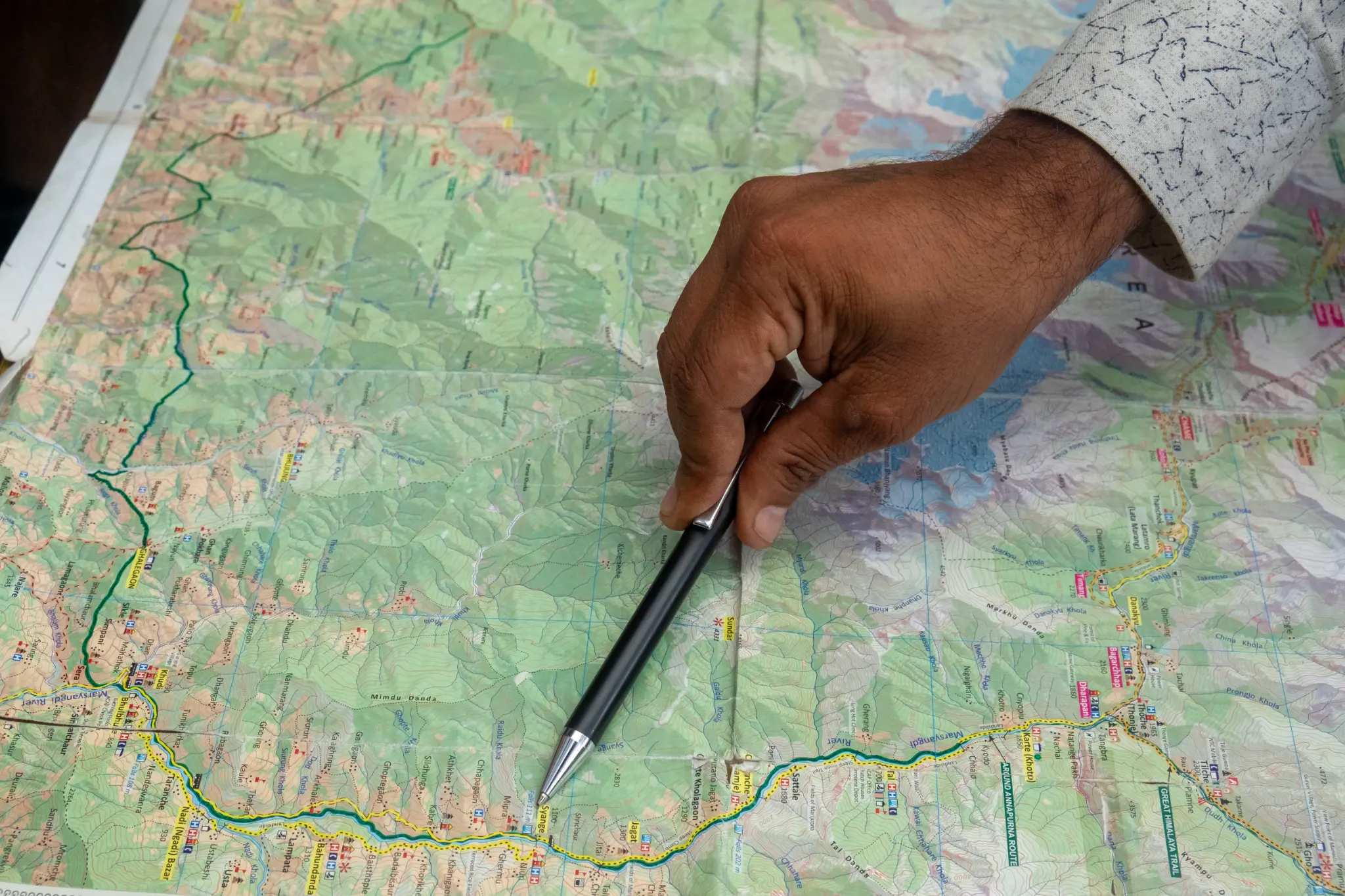
The initial route was designed as a modular system with three phases: Western Europe (3 months), Eastern Europe and Balkans (4 months), and Asia (6+ months). Each phase had defined entry/exit points, allowing for route adjustments without breaking the overall structure.
Decision framework: For each segment, I evaluated three routing options and scored them on budget (€/day), time efficiency (km/day), and attraction density (points of interest per week). The selected route wasn't always the cheapest or fastest—it was the one that maximized the weighted score across all three variables.
Example: The decision to route through the Balkans instead of flying directly to Turkey saved €340 in transport costs but added 18 days to the timeline. The trade-off was acceptable because those 18 days unlocked access to Albania, North Macedonia, and Montenegro—three countries with low daily costs (€25-30/day) and high photographic value.
Logistics coordination
Transportation required constant coordination across multiple providers with different booking windows, cancellation policies, and reliability levels. I maintained a rolling 14-day booking horizon: accommodations booked 3-5 days ahead, buses and trains booked 7-10 days ahead, flights booked 30+ days ahead when possible.
Incident management: Flight cancellations to New Zealand forced a complete route redesign in under 48 hours. The original plan (Europe → New Zealand → Southeast Asia) became (Europe → Thailand → New Zealand → Australia). This required rebooking three flights, adjusting visa timelines, and renegotiating remote work deadlines with two clients. The total financial impact was €180 in rebooking fees, but the alternative—waiting for the next available flight—would have cost €450 in lost accommodation and missed work commitments.
Backup systems: I maintained three layers of redundancy: primary route with confirmed bookings, secondary route with researched but unbooked options, and emergency fallback (return to Spain). The emergency fallback was never activated, but having it defined reduced decision paralysis during high-stress incidents.
Financial management
The project operated on a target budget of €35/day (€1,050/month), covering accommodation, food, transport, insurance, and equipment maintenance. I tracked every expense in a spreadsheet with five categories: accommodation, food, transport, work (coworking, SIM cards), and contingency.
Budget performance: Actual average daily cost was €38.20/day, 9.1% over target. The variance came from three sources: higher accommodation costs in Western Europe (€15-20/night vs. €10-12 target), unplanned equipment repairs (camera sensor cleaning, laptop battery replacement), and transport cost inflation in Southeast Asia post-COVID.
Cash flow management: I operated with a 60-day cash buffer to absorb unexpected costs without requiring emergency transfers from Spain. This buffer was tested twice: once during the New Zealand flight cancellation (€180 unplanned expense), and once during a two-week period without remote work income in Thailand.
Currency strategy: I used Revolut for daily expenses to minimize foreign exchange fees, kept €500 in emergency cash (USD and EUR), and maintained a Spanish bank account for receiving remote work payments. Total foreign exchange losses over 500+ days: €47.
Work coordination
I maintained remote work commitments throughout the journey, primarily in content translation and booking coordination. This required managing client expectations around availability, internet reliability, and time zones.
Operational constraint: I could only accept work that met two criteria: (1) tasks that could be completed asynchronously with 24-48 hour turnaround, and (2) locations with reliable internet (coworking spaces, cafes with tested connections, accommodations with verified WiFi).
Example: While working for TakeOff Ibiza remotely, I coordinated bookings from Thailand, managing a 6-hour time difference. This required setting fixed availability windows (7am-11am local time = 1pm-5pm Ibiza time) and building message templates to speed up responses during high-volume periods.
Documentation and archive building
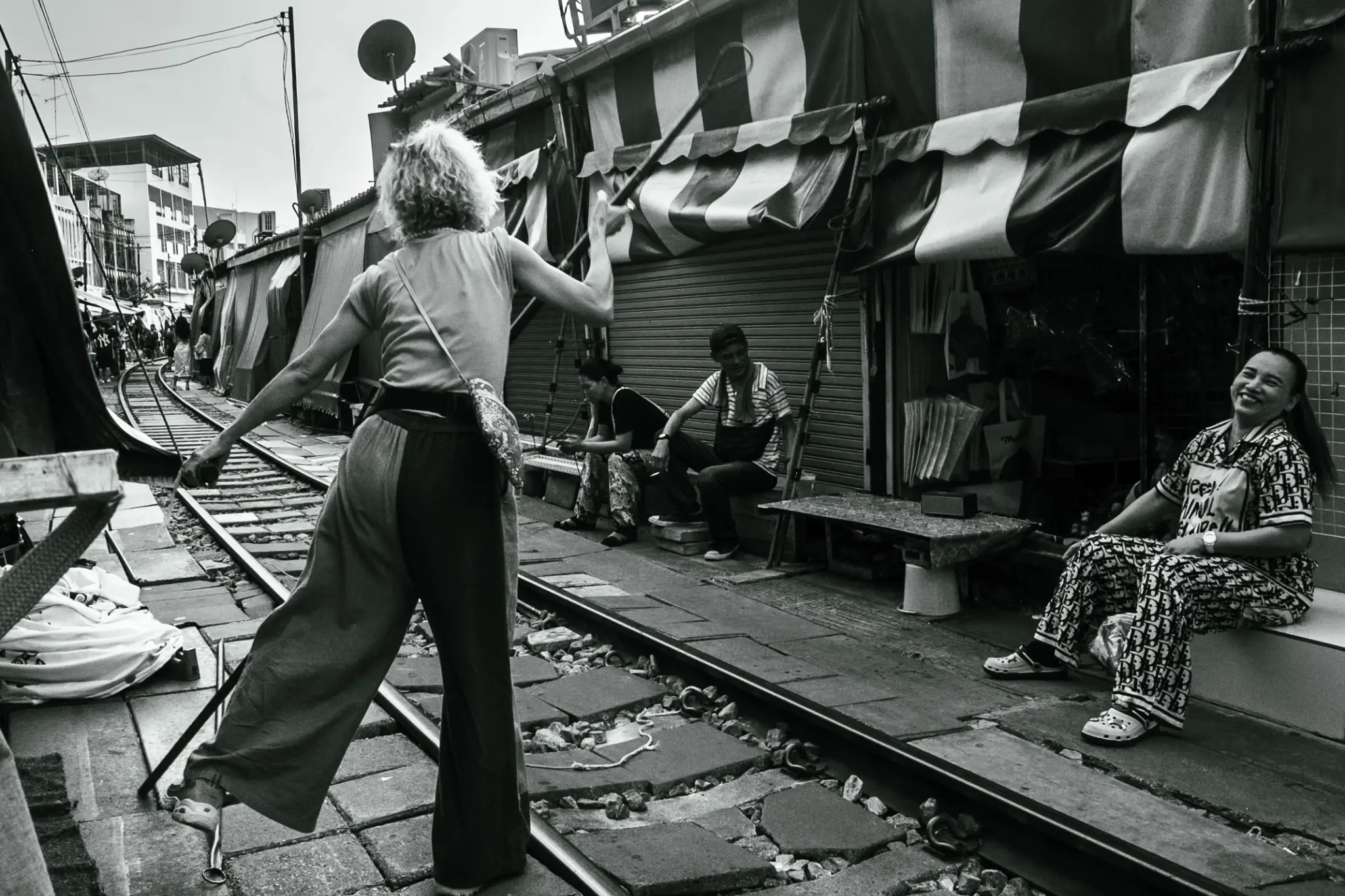
The photo archive was structured as a parallel operational workstream with its own workflow: daily capture (no thematic restrictions), weekly editing and selection (discard redundant material), and monthly cataloging (metadata assignment, backup verification).
System design: I used Lightroom for editing and cataloging, with a three-tier backup system: primary storage on laptop SSD, secondary backup on external HDD (updated weekly), and tertiary cloud backup via Google Photos (updated monthly in locations with fast WiFi).
Output metrics: 10,000+ images captured, 1,200+ images selected for archive, 300+ images published on this website. The selection rate (12%) reflects aggressive editing—most material was discarded to maintain quality standards.
Results
Operational execution: 500+ days on the road across 15+ countries, maintaining financial sustainability and professional commitments. Zero emergency returns to Spain. Zero missed client deadlines.
Financial performance: Total project cost: €19,100 over 500 days (€38.20/day average). 9.1% over initial budget target, but within acceptable variance given external factors (post-COVID transport inflation, Western Europe accommodation costs).
Professional output: This website, a structured photo archive with 1,200+ curated images, and operational experience managing complex logistics under uncertainty.
Incident response: Successfully managed two major disruptions (New Zealand flight cancellations, visa complications in Thailand) without breaking the project timeline or exceeding the contingency budget.
What I learned
Planning is a tool, not a constraint. The initial route was redrawn four times during execution. The value of planning wasn't in following the plan—it was in having a structured framework for evaluating changes. Every deviation was a conscious decision with documented trade-offs, not a reactive scramble.
Redundancy is expensive but essential. Maintaining a 60-day cash buffer and three-tier backup system added upfront cost, but both systems were tested and validated during real incidents. The cost of not having them would have been project failure.
Optimization is multi-dimensional. The cheapest route is not always the best route. The fastest route is not always the most valuable route. Every decision required balancing budget, time, and strategic value (access to work opportunities, photographic content, professional network building).
Logistics experience is transferable. The skills developed in this project—route optimization, financial tracking, incident management, multi-stakeholder coordination—are directly applicable to operational roles in any industry. This wasn't a vacation. It was a 500-day operations management case study.
Value for a company
This project demonstrates operational capabilities that are difficult to develop in traditional work environments:
Decision-making under uncertainty: Managing a project where every variable (weather, costs, visa timelines, work availability) is in constant flux, with no safety net and no team to delegate to.
Financial discipline: Operating a multi-month project on a lean budget with zero external funding, tracking every expense, and maintaining cash flow without emergency bailouts.
Logistics coordination: Managing complex multi-provider operations (flights, buses, trains, accommodations) across different countries, languages, and regulatory environments.
Incident response: Handling high-stakes disruptions (flight cancellations, visa complications) with tight time constraints and limited resources, while maintaining professional commitments.
Systems thinking: Building operational frameworks (route planning, financial tracking, backup protocols) that scale across different contexts and remain functional under stress.
For a company, this translates to someone who can manage complex projects, adapt to changing conditions, maintain financial rigor, and deliver results without constant supervision.